Outpost Luna: Train for the Moon, Out Loud
In April 2026, Artemis II flew its crew around the Moon. NASA plans to land astronauts there again on Artemis IV in 2028. That is close enough to follow along, and we wanted a way to do it that is more than reading headlines. So for NASA Space Apps 2026 we built Outpost Luna: a desktop app where you learn the Moon by talking to Mission Control.
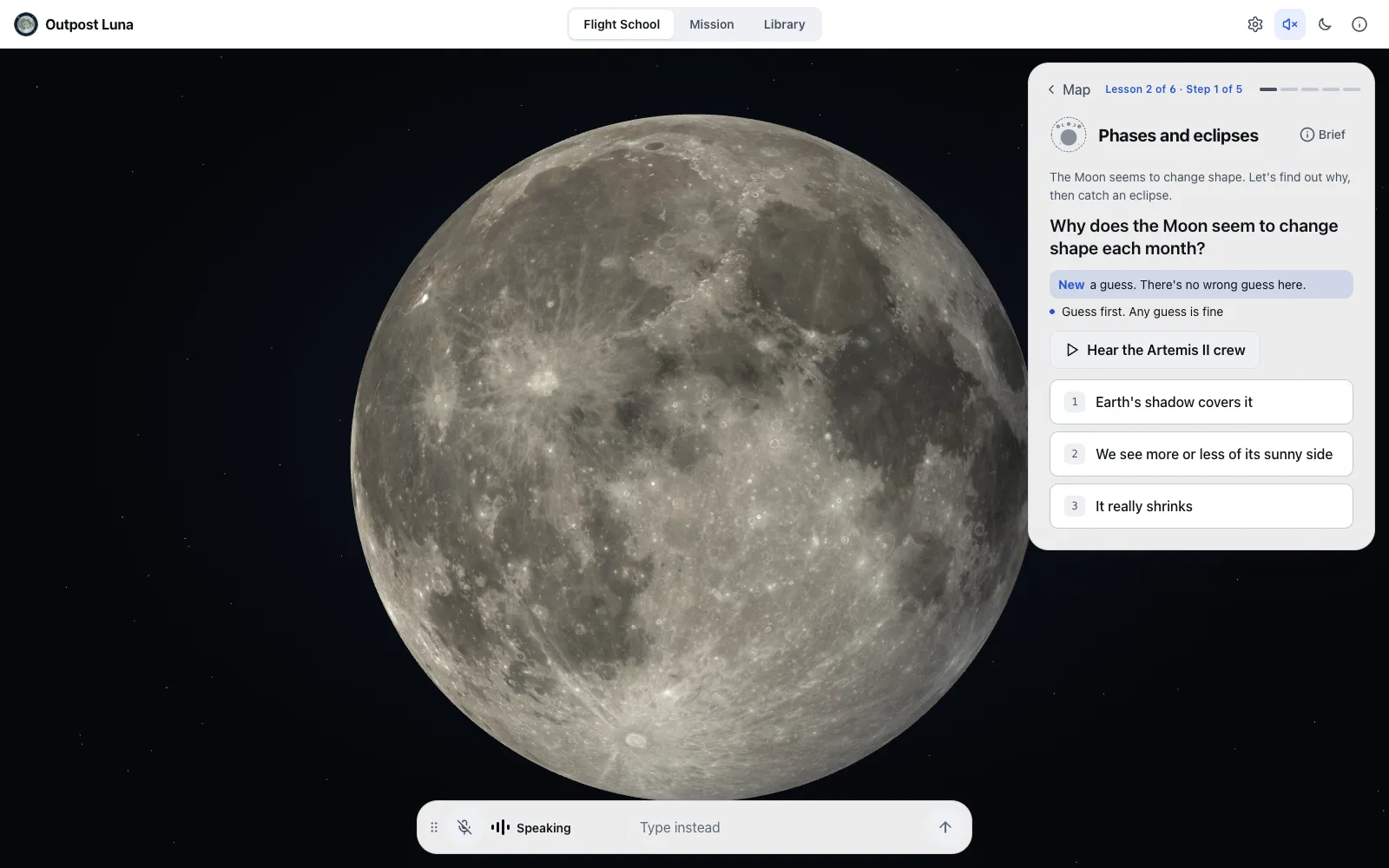
Flight School: talk to CAPCOM
CAPCOM is the voice astronauts hear from Mission Control. In Outpost Luna, CAPCOM is your teacher. There are 8 lessons (6 core, 2 explorer) and a check ride at the end. CAPCOM asks, you answer out loud, and along the way you hear 74 clips of the real Artemis II crew and watch NASA videos inside the lessons.
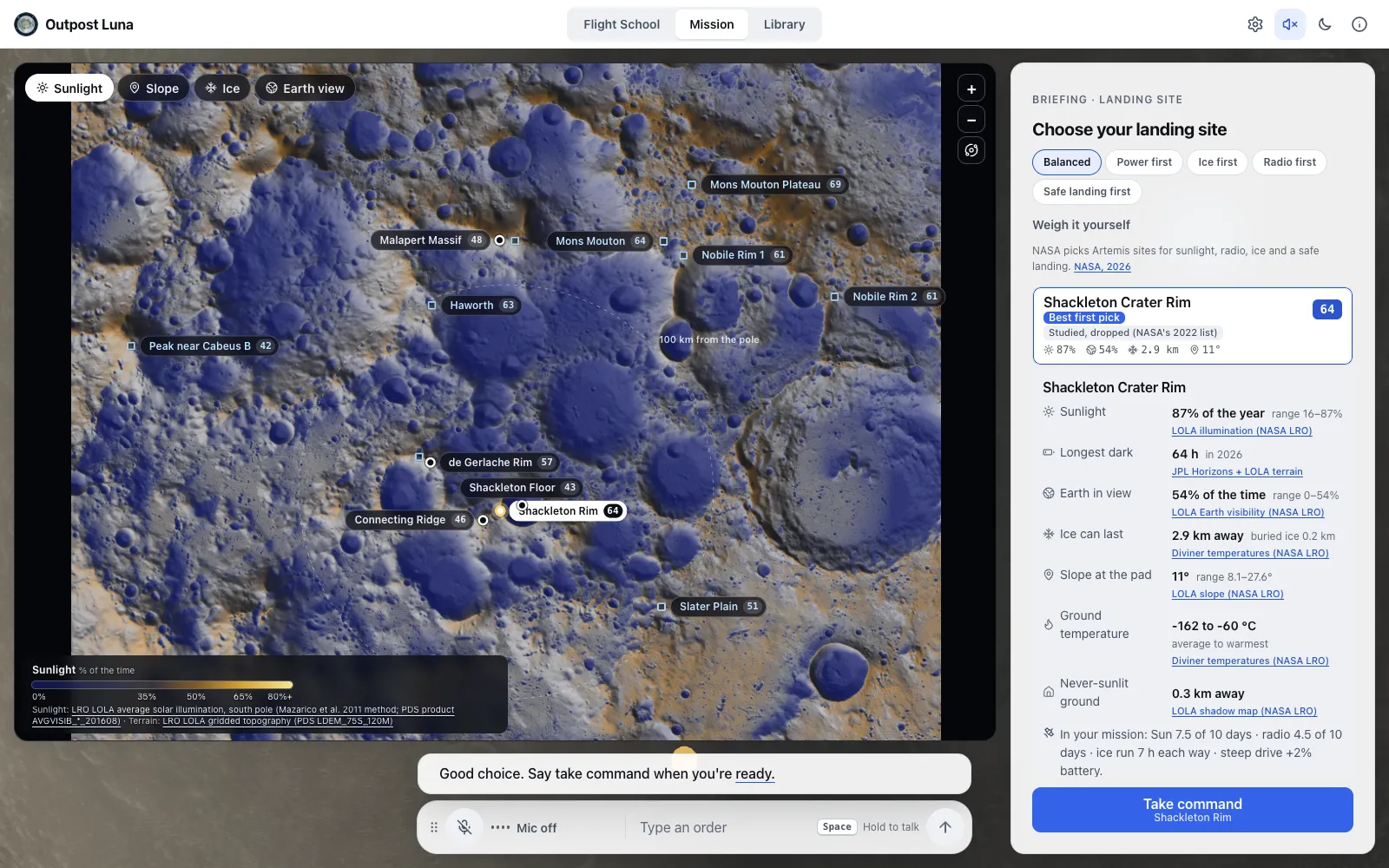
Mission: run a south-pole outpost
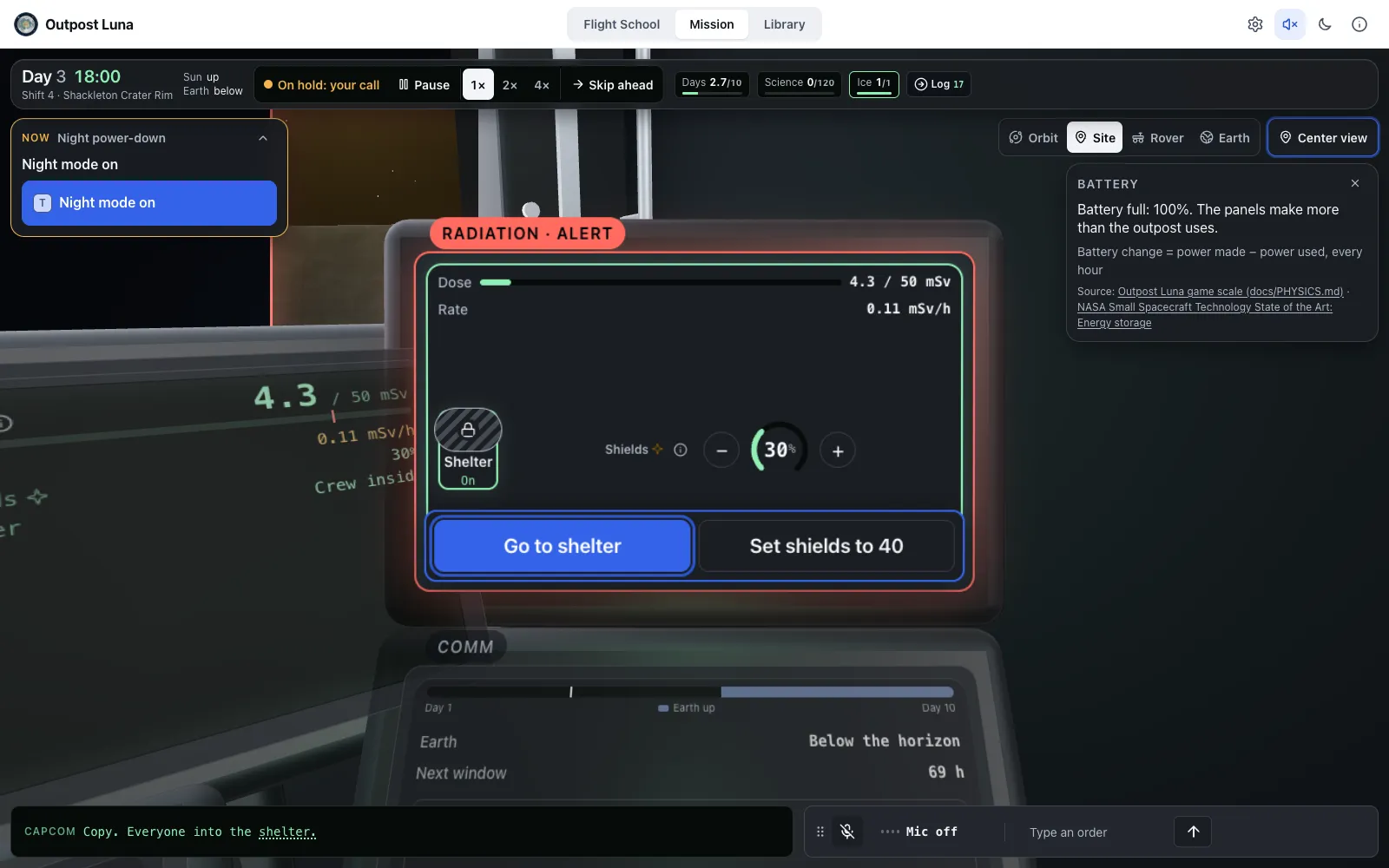
Then you take command. Pick a landing site at a real south-pole location, using terrain, sunlight and ice maps from NASA's Lunar Reconnaissance Orbiter (LOLA, Diviner, LROC). Run the outpost for 10 days: keep the power up, get the science done, and keep your crew safe. The Sun and Earth sit where JPL Horizons says they do, and the space weather is real: 13 solar storms from 2017–2025, taken from NASA's DONKI database. Missions autosave, so you can stop and pick up later.
Library: fly anywhere, ask anything
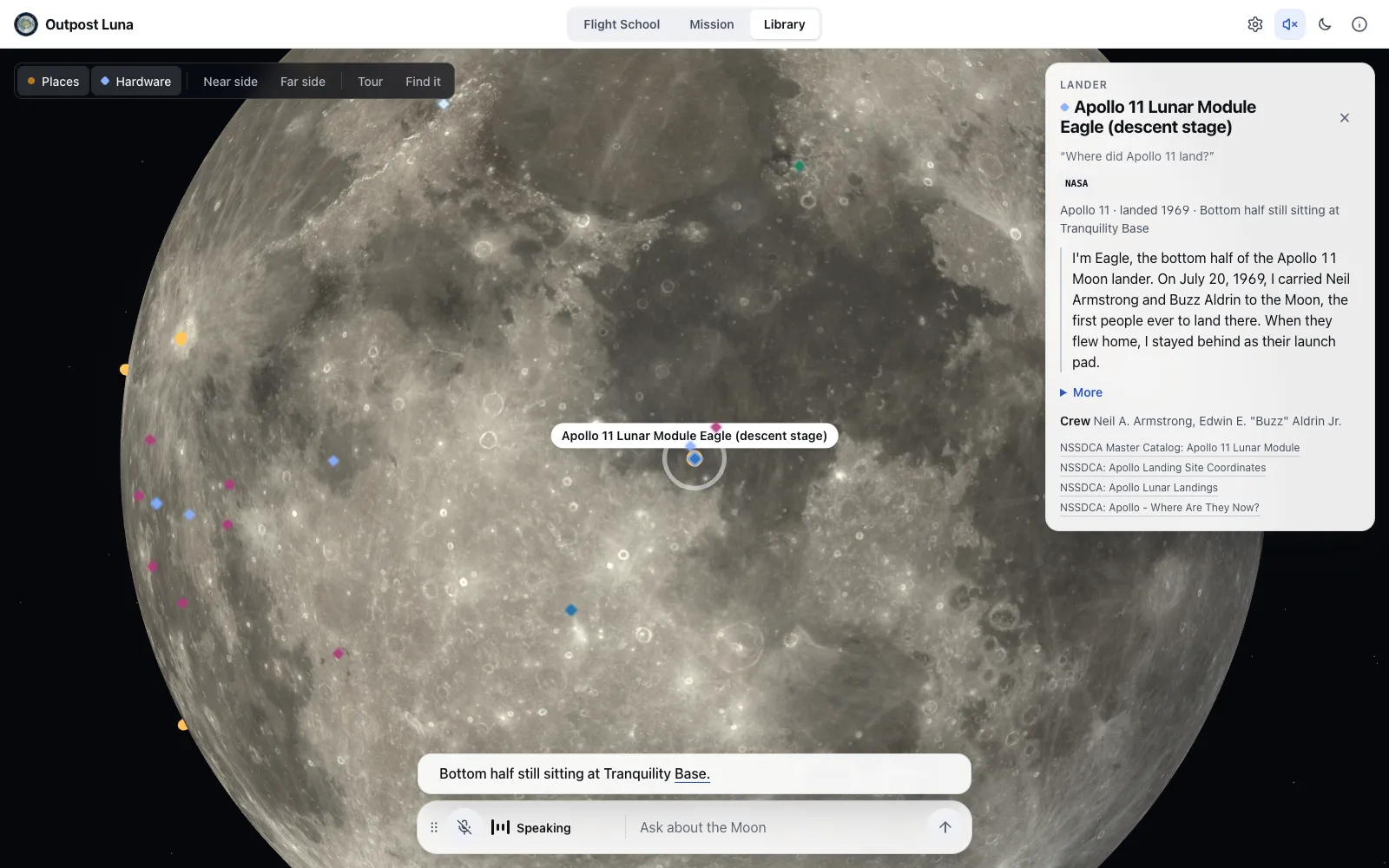
Spin the Moon, ask for a place, and land on it. The Library holds 36 pieces of real hardware from NASA's NSSDCA catalog, each with its story and sources. Drive it all with voice, tap, keyboard, a game controller or hand gestures.
It all runs on your computer
No cloud, no account. After setup, Outpost Luna works offline. The ear is our own speech model, Arc Transcriber Space, tuned to understand space talk and running on your machine.
| Test | Arc | NVIDIA base |
|---|---|---|
| Word errors, Artemis II crew audio | ~13% | 29% |
| Word errors, NASA podcasts | 7.0% | 9.7% |
| Names linked correctly | ~95% | — |
Get it, free
Outpost Luna is free for Mac (Apple silicon, macOS 13+) and Windows 10/11. The download is about 770 MB, models included. Download it and watch the film at the Outpost Luna site.
Built by the Outpost Luna team: Karan Singla and Bryan Pellom.
Inspired by NASA's Artemis program. Uses NASA open data; not endorsed by NASA.